Miami University · 2021
AI & Gender in Romantic Fiction
A Python sentiment-analysis study of emotion and gender representation in romance text data.
Role
Researcher
Client
Miami University
Year
2021
Focus
NLP, Python, Sentiment Analysis
Overview
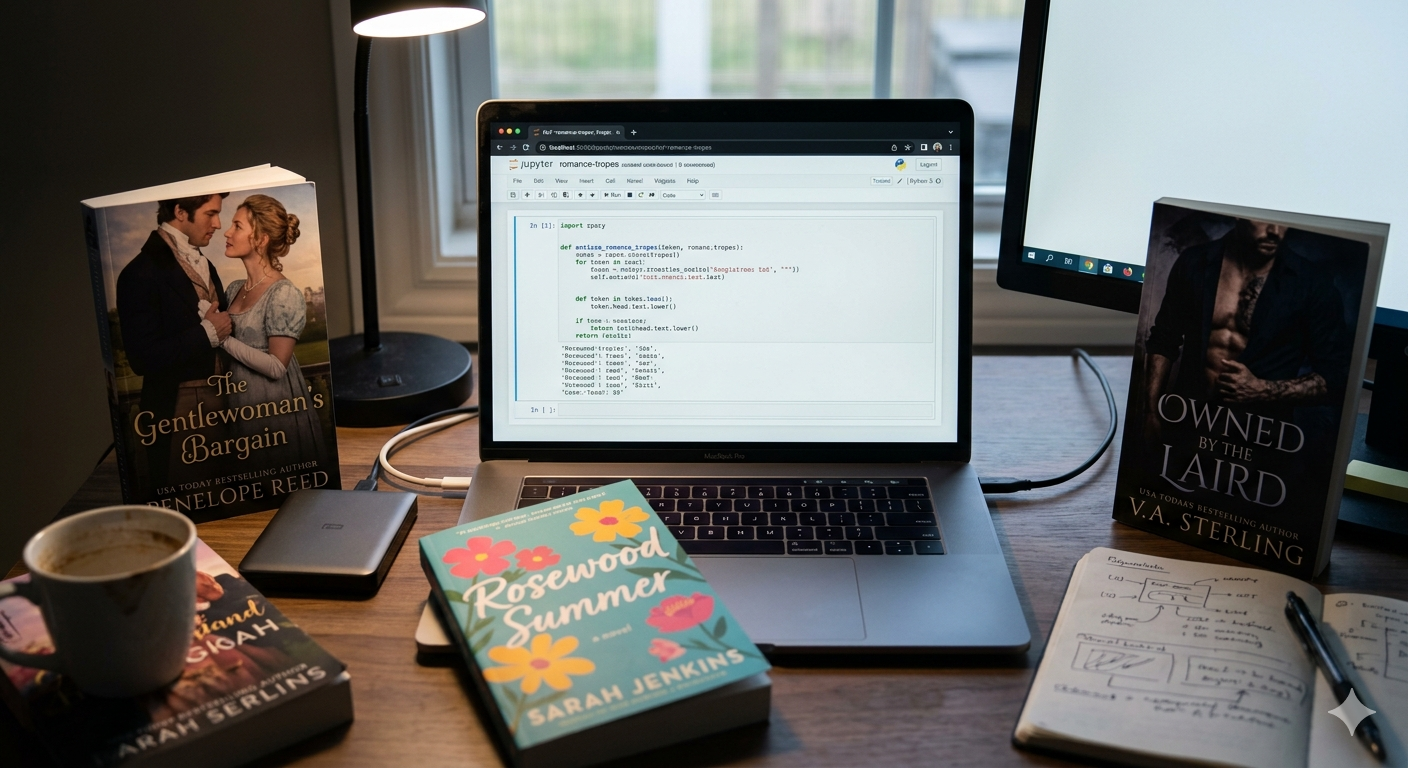
Built a Python sentiment-analysis tool using NRCLex, NLTK, and WordNet to surface emotional patterns and gender representation in romantic fiction text data.
Context
An early experiment in pairing computational methods with the kind of cultural reading anthropology trains for, letting each catch what the other misses.
Impact
Demonstrated an adaptable UX research methodology in an NLP context, a throughline that still shapes how I design conversational-AI studies today.
NRCLex · NLTK · WordNet
Stack
Sentiment + cultural reading
Method
Personas + analysis
Output
Research goals
- Surface emotional patterns and gender representation in romantic fiction text data.
- Pair computational analysis with the kind of cultural reading anthropology trains for.
- Connect computational insights to plausible stakeholder use cases via personas.
Methods
- Cleaned and analyzed large text datasets for emotional trends.
- Framed findings through cultural context, storytelling, and computational linguistics.
- Built research personas linking computational insights to real stakeholder use cases.
Research process
Corpus cleaning & preparation
Cleaned and structured large text datasets so sentiment and lexical analyses would run against consistent inputs rather than noisy raw text.
Sentiment & lexical analysis
Used NRCLex, NLTK, and WordNet to surface emotional trends and gendered patterns in the corpus, running computational analysis as the first pass, not the final word.
Cultural reading & framing
Framed computational findings through cultural context, storytelling, and computational linguistics, letting each lens catch what the other missed.
Persona translation
Built research personas linking the computational insights to real stakeholder use cases, demonstrating how an NLP study could feed a product or design conversation.
Key research decisions
Lessons learned
What I'd carry forward.
Sentiment scores are a starting point for interpretation, not an answer, the cultural reading is what made the numbers mean something.
Translating a computational study into personas is what turned an academic NLP project into something a product team could use.
Holding the computational and cultural lenses in tension on purpose kept either one from overwriting the other.
Next case study ↘