University of Oregon × Myaamia Center · 2022
Myaamia & Ojibwe Language Study + Stakeholder Presentation
Presenting Myaamia and Ojibwe language research to tribal, academic, and federal stakeholders, grounded in acoustic phonetics and rigorous method.
Role
NSF REU Fellow, Linguistics
Client
University of Oregon × Myaamia Center
Year
2022
Focus
Stakeholder Engagement, Research Presentation, Acoustic Phonetics
Overview
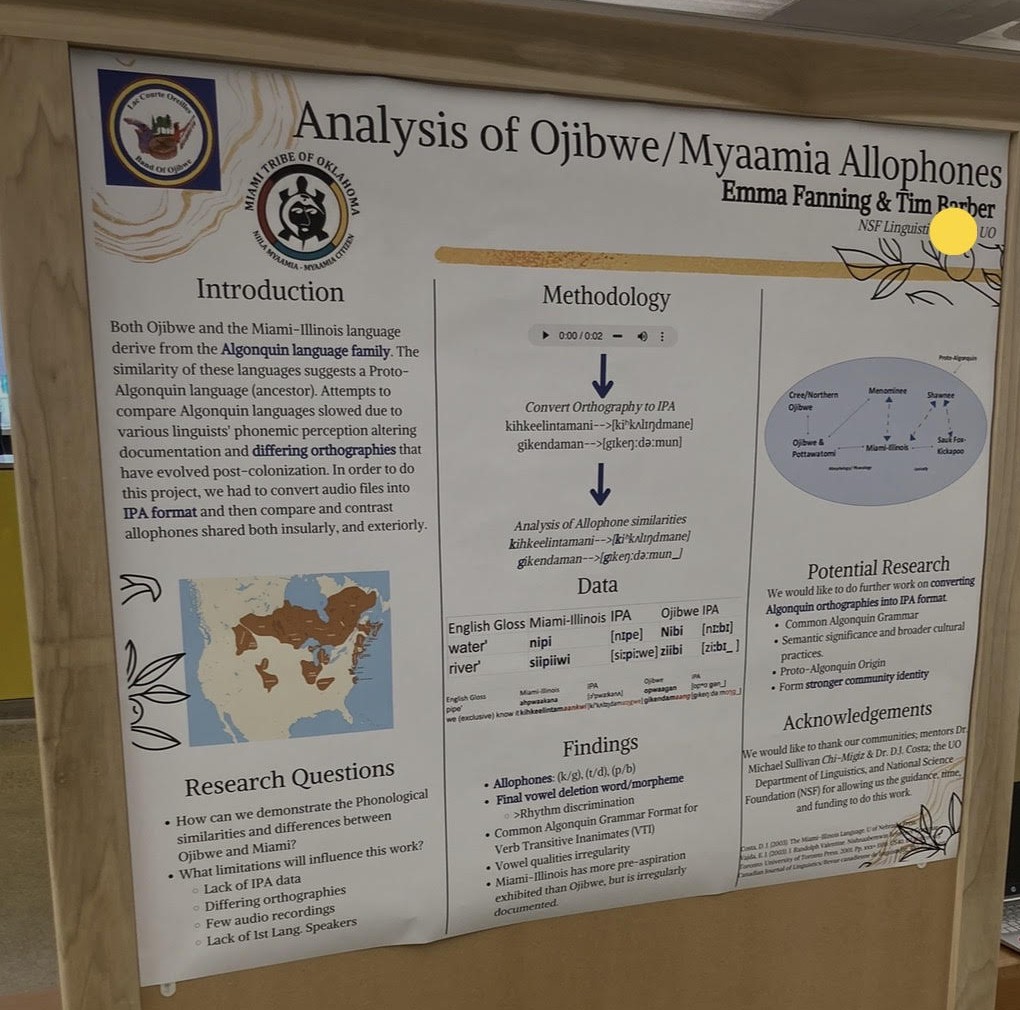
Part of my National Science Foundation (NSF) REU fellowship, presented as a research poster to tribal members, faculty, and federal grant administrators.
It paired acoustic-phonetic analysis of Myaamia and Ojibwe with a stakeholder-facing presentation, turning technical linguistics into findings partners could carry forward.
Context
Myaamiaataweenki (the language of the myaamia people) and Ojibwe are reawakening Indigenous languages with small but growing bodies of acoustic documentation. The study examined allophones, the subtly different ways a single speech sound is pronounced depending on its phonetic environment, variations that don't change a word's meaning but reveal how the sound system works. Acoustic evidence of this patterning supports both pedagogy and the revitalization work led by community partners.
Impact
Delivered acoustic evidence and a stakeholder presentation that fed directly into ongoing revitalization work, and, as much as the findings, established long-lasting relationships among Indigenous researchers and community members for future research to build on.
200+
Stakeholders presented to
Tribal · academic · federal
Audience
Praat
Tools
Research goals
- Present Myaamia and Ojibwe language findings in a format accessible to tribal, academic, and federal stakeholders.
- Document allophonic variation with rigorous acoustic evidence and a strong linguistics foundation.
- Leave deliverables and relationships that future revitalization research can build on.
Methods
- Presented findings as a research poster to 200+ stakeholders, tribal members, university faculty, and federal grant administrators, translating technical results for non-specialist audiences.
- Parsed out allophonic similarities from existing open-source audio files alongside first-person Indigenous community members, then segmented tokens in Praat and analyzed formant and duration data to identify the environments conditioning the variation.
- Held the work to rigorous research methods, producing documentation usable for future phonological description.
- Built long-lasting relationships with Indigenous researchers and community members, leaving deliverables their revitalization work could build on.
Research process
Stakeholder presentation & engagement
Designed and presented a research poster to 200+ tribal members, university faculty, and federal grant administrators, calibrated to be readable by non-specialist community audiences without diluting the technical content.
Acoustic analysis & hard linguistics skills
Drew on existing open-source audio files and first-person Indigenous community members to parse out allophonic similarities, then segmented and measured tokens in Praat, analyzing formant and duration data to pin down the phonological environments in which allophones surfaced.
Deliverables for future research
Produced documentation held to a standard usable for phonological description, so the work could serve ongoing pedagogy and revitalization rather than sit as a one-off study.
Lasting community relationships
Worked from existing open-source audio files and directly with first-person community members, building long-lasting relationships among Indigenous researchers and community members that future research can continue.
Key research decisions
Lessons learned
What I'd carry forward.
Hard linguistics skills are only useful if you can translate them for a non-specialist audience, the presentation mattered as much as the analysis.
Working from open-source audio alongside first-person community members made the findings both rigorous and accountable to the people they came from.
Presenting to stakeholders is research, not an afterthought, it's where trust and future collaboration get built.
Next case study ↘