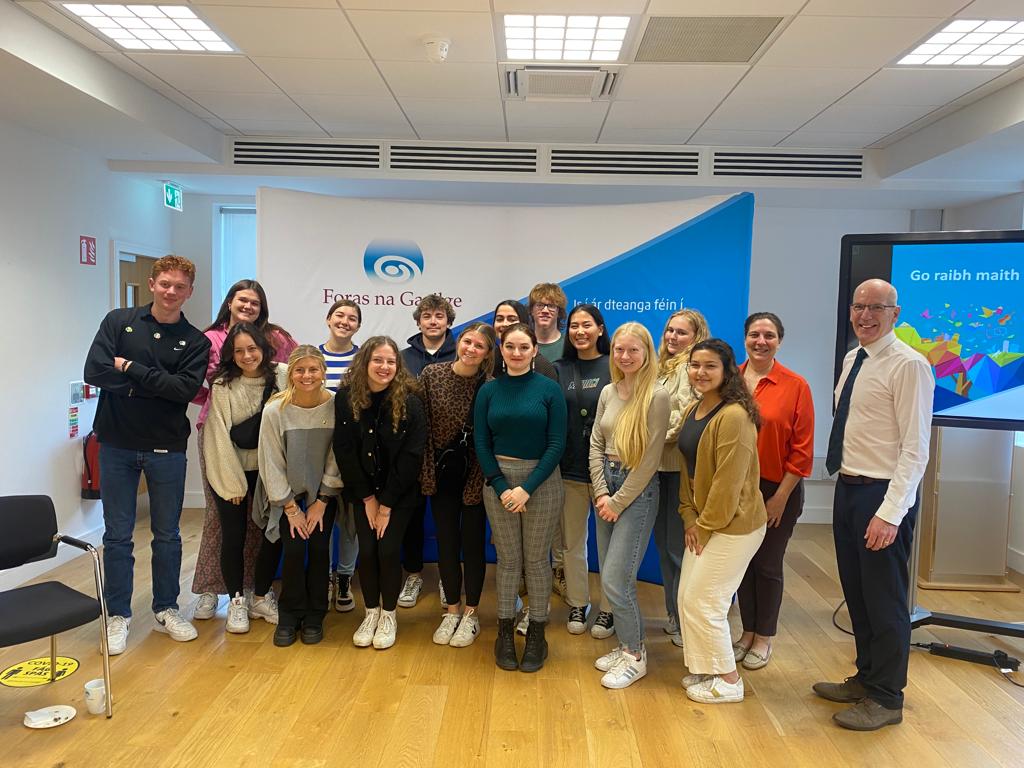
Miami University × Foras na Gaeilge × Údarás na Gaeltachta · 2022
Indigeneity, Identity & Ireland
Multilingual fieldwork across Irish (Gaeilge) and Indigenous North American research communities.
Role
Project Coordinator
Client
Miami University × Foras na Gaeilge × Údarás na Gaeltachta
Year
2022
Focus
Ethnographic Research, Multilingual Fieldwork
Overview
Coordinated cross-cultural fieldwork connecting Irish and Indigenous North American language-revitalization communities, then synthesized findings into insights for academic and community audiences.
Context
Language revitalization work is relational, calendars, IRB paperwork, and translation logistics all have to support trust between communities, not get in its way.

Impact
Findings presented to academic and community audiences, supporting cultural and linguistic revitalization initiatives on both sides of the partnership.
2
Continents coordinated
3
Institutional partners
Gaeilge + Indigenous NA
Languages in scope
Research goals
- Connect Irish (Gaeilge) and Indigenous North American language-revitalization communities through shared research questions.
- Hold logistics and IRB compliance to a standard that protects, rather than burdens, community partners.
- Translate fieldwork into insights usable by both academic and community audiences.
Methods
- Managed interview schedules, participant logistics, and IRB documentation across two continents.
- Cultivated research partnerships with Foras na Gaeilge and Údarás na Gaeltachta.
- Synthesized qualitative interview and archival data into actionable insights.
Research process
Partnership cultivation
Built research partnerships with Foras na Gaeilge and Údarás na Gaeltachta, treating relationship-building as the substrate that everything else depends on.
Logistics & IRB across two continents
Managed interview schedules, participant logistics, and IRB documentation across two continents, keeping the paperwork in service of trust rather than the other way around.
Fieldwork & interviewing
Conducted and coordinated multilingual interviews, holding methodological consistency across very different linguistic and cultural contexts.
Synthesis & dual-audience reporting
Synthesized qualitative interview and archival data into actionable insights, presented in formats appropriate for both academic and community audiences.
Key research decisions
Lessons learned
What I'd carry forward.
In language-revitalization work, logistics and IRB paperwork either protect community trust or erode it, there is no neutral option.
Reporting back to community audiences first, not as an afterthought to the academic write-up, changed how the work was received.
Holding interview methodology consistent across very different cultures let me compare findings without flattening the differences.
Next case study ↘